- AccountsRecovery Daily Digest
- Posts
- Daily Digest - March 11, 2026
Daily Digest - March 11, 2026
Brought to you by: TCN | By Mike Gibb

Mike Gibb
March 11, 2026

🎂 Happy Birthday to the following: Chris Dunkum of First Collection Services, Andy Passen of The CCS Companies, Heidi Schollenberger of JJ Marshall & Associates, and Sudipto Mukherjee of Encore Capital Group.
🎉 Congratulations for starting new positions: Doug Handschumacher as Senior Vice President Data & Analytics at Crown Asset Management, Brandon Bitz as Chief Operating Officer at The Hauge Group, and Timothy Patterson as EVP Deputy General Counsel - Litigation & Legal Operations at Exeter Finance.
FCRA Claim Dismissed After Plaintiff Fails to Allege Dispute Was Sent Through Credit Bureau
A District Court judge in New York has granted a defendant’s motion to dismiss claims it violated the Fair Credit Reporting Act when it reported an unpaid insurance debt to the plaintiff’s credit report.

A MESSAGE FROM TCN

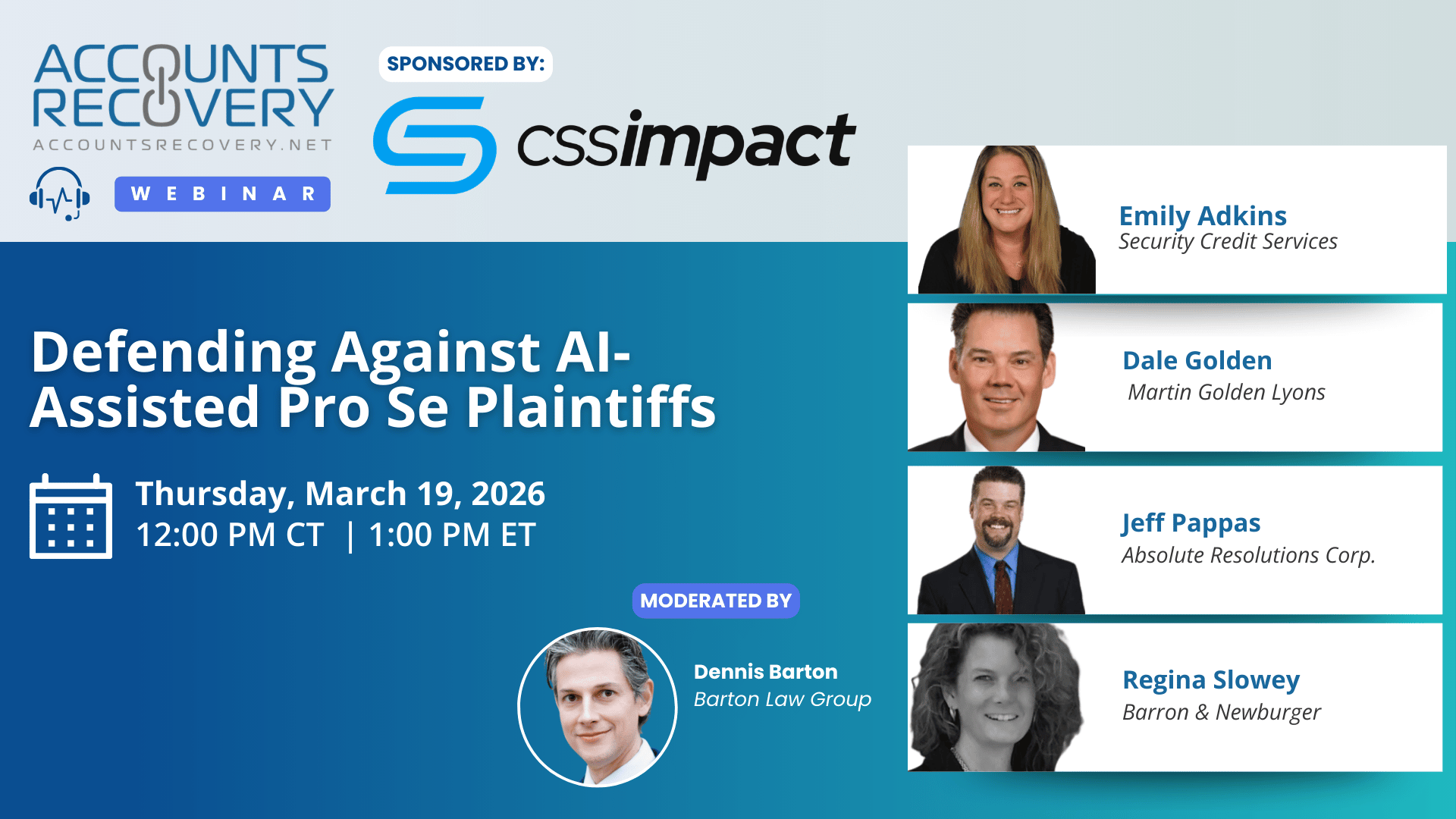
TODAY’S WEBINAR

UPCOMING WEBINARS
 |  |
 |  |
 |
Judge Grants MSJ For Defendant After Borrower Tried to Force Arbitration Mid-Litigation
A District Court judge in New Jersey has granted a defendant’s motion for summary judgment in a Fair Debt Collection Practices Act case using a doctrine I’ve never heard of before.
Student Loan Repayment Shake-Up: Appeals Court Orders End to SAVE Program
A federal appeals court has cleared the way for the end of the Saving on a Valuable Education (SAVE) repayment plan, a program that lowered monthly payments for millions of federal student loan borrowers. The decision could have ripple effects across the credit and collection ecosystem, as many borrowers who had been paying little or nothing under the plan may soon face significantly higher monthly bills. With more than 7 million borrowers enrolled in SAVE and millions more affected by related repayment rules, the ruling raises questions about borrower affordability, repayment behavior, and how rising student loan obligations may affect consumers’ ability to manage other debts.
Report Finds Republican Voters Carry Higher Average Medical Debt Than Democrats
Medical debt remains one of the most significant financial burdens facing American households, and a new analysis suggests that the problem is especially pronounced among Republican voters. According to a report from the policy organization Third Way, Republican voters collectively carry an estimated $70 billion in medical debt compared with roughly $65 billion for Democratic voters. The report also found that Republican voters tend to carry higher balances per person, a trend that reflects broader demographic and economic factors that shape both health care costs and voter behavior.
37 Companies Seeking Collection Talent
Check out this week's job listings summary for more than three dozen creditors, healthcare providers, debt collectors, debt buyers and more who are hiring.
WORTH NOTING: More Americans are dipping into their retirement savings … Which are the 10 happiest cities in the United States … The president has started handing out dress shoes to friends and advisors ... A growing number of Americans think the country should ban the practice of tipping ... Amazon has launched a healthcare AI Assistant on its website and app ... Bam Adebayo went off for the second-most points ever scored in an NBA game last night ... Buc-ee's did not get a passing grade from the Better Business Bureau ... A look at the new emojis that are going to be available on your phone.
Wisdom Wednesday, part I
Wisdom Wednesday, Part II
Webinar Recap: The Other Half of QA: Coaching Teams on What They Didn’t Say on the Call or Text
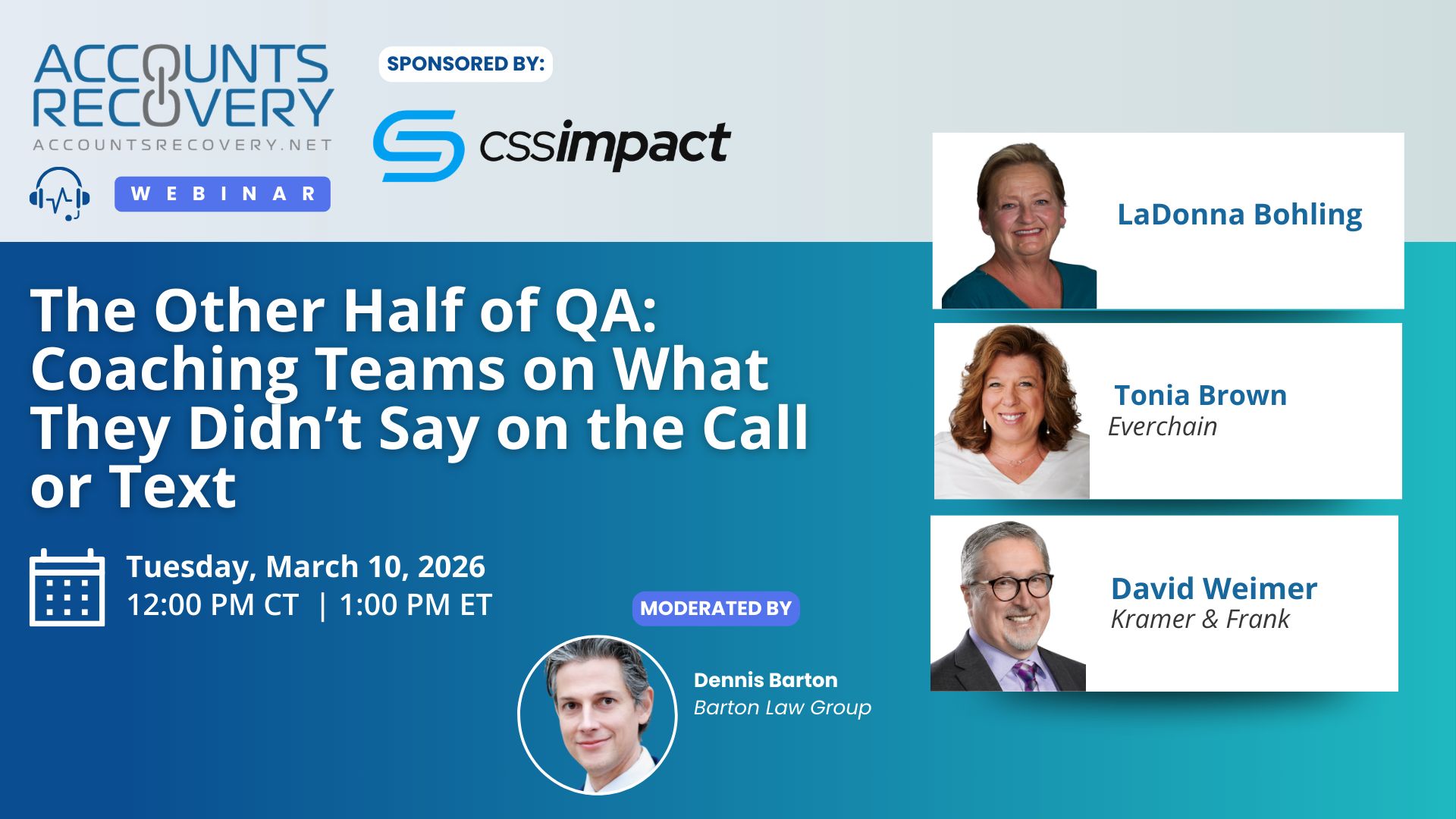
In a recent webinar hosted by Mike Gibb and sponsored by CSS Impact, industry leaders explored the overlooked side of quality assurance (QA) in collections: what agents don’t say during calls or texts. While compliance and scripts remain essential, panelists emphasized that missed empathy cues, tone shifts, pauses, and unspoken hesitation often reveal deeper insights into agent performance, training needs, and consumer engagement.
Dennis Barton, LaDonna Bohling, Tonia Brown, and David Weimer shared perspectives on moving beyond “check-the-box” compliance toward authentic dialogue. Bohling noted, “When did we stop teaching people how to collect? We’re not a nonprofit.” The panel agreed that empathy, active listening, and conversational control are critical skills that must be taught and reinforced.
Key strategies discussed included role-play, live monitoring, and call calibrations to help agents recognize missed opportunities. Weimer highlighted the importance of empathy over sympathy: “When a collector says ‘I’m sorry,’ it can sound insincere. Saying ‘That must have been horrible’ is more realistic.” Brown added that training should focus on teaching agents to listen actively, mirror consumer statements, and balance compliance with genuine conversation.
The session underscored that effective QA must capture not only what was said but also what was left unsaid—turning missed cues into opportunities for stronger consumer relationships and better outcomes.
🧠 Key Takeaways:
Expand QA scorecards: Include non-verbal cues such as pauses, tone changes, and missed empathy opportunities alongside compliance checks.
Invest in listening training: Use role-play, mock calls, and self-review to teach active listening and tactical empathy.
Balance compliance with dialogue: Script only essential disclosures, then allow agents flexibility to build rapport and trust with consumers.
This webinar highlights a shift in QA philosophy: success in collections depends not just on compliance, but on listening, empathy, and authentic human connection.
Did you know you can get full access to all of my past webinars, along with transcripts and summaries of each, for only $29/month? Sign up to be a premium subscriber today!
The Daily Digest is sponsored by TCN