- AccountsRecovery Daily Digest
- Posts
- Daily Digest - February 9, 2026
Daily Digest - February 9, 2026
Brought to you by: TCN | By Mike Gibb

Mike Gibb
February 09, 2026

🎂Happy belated Birthday to the following: Lauren Valenzuela of TrueML (Feb. 8), Kyle Sternig of Landmark Credit Union (Feb. 8), Holly Marker of RNN Group (Feb, 8), Louis Ochoa of Kane Acceptance (Feb. 8), James Shannon White of Business Alliance Financial Services (Feb. 7), Jimmy Padia of Floatbot (Feb. 7), Drew Sacher of Corporate Advisory Solutions (Feb. 7), and John Greene of State Securities Corp (Feb. 7).
🚨New Training Bytes Video Released!
Check out the newest Training Bytes video! Each week, an expert from the accounts receivable management industry will share how he or she would handle different scenarios that collectors often face. This week, David Alderman from CBE Companies shares what collectors should do when a consumer demands to speak only with a supervisor. Thanks to Peak Revenue Learning for sponsoring this series! Click on the image below to view this week’s episode!

Court Rejects Bare Bones FDCPA and FCRA Allegations in Dispute Case
A District Court judge in Delaware has granted a defendant’s motion to dismiss a lawsuit claiming it violated the Fair Credit Reporting Act and the Fair Debt Collection Practices Act while also denying the plaintiff’s motion to remand the case back to state court, pointing out a number of deficiencies in the plaintiff’s filing. The ruling reinforces that cases asserting only federal claims belong in federal court, even when plaintiffs attempt to argue that state law issues are in play.

A MESSAGE FROM TCN

TODAY’S WEBINAR

UPCOMING WEBINARS
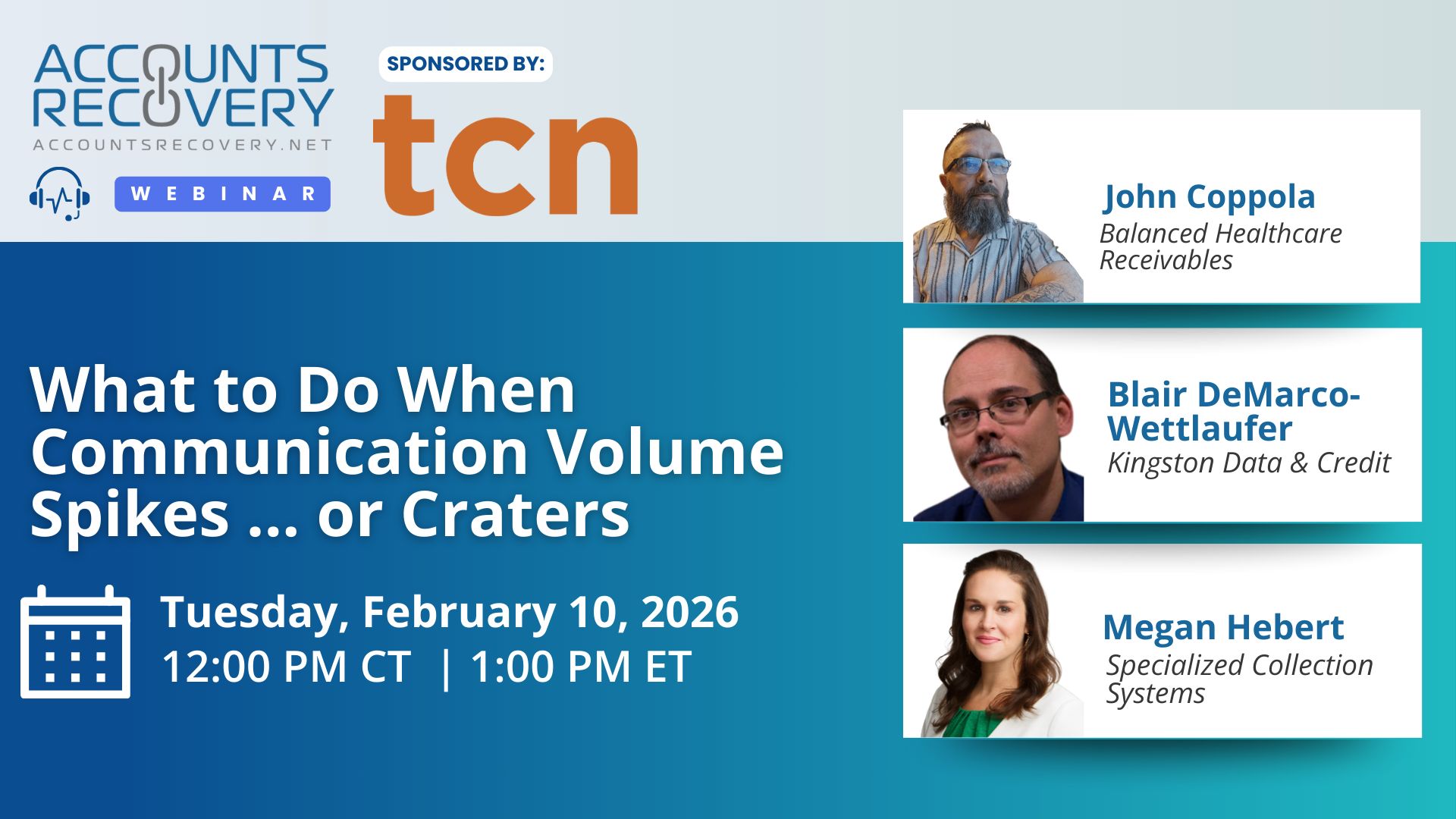 | 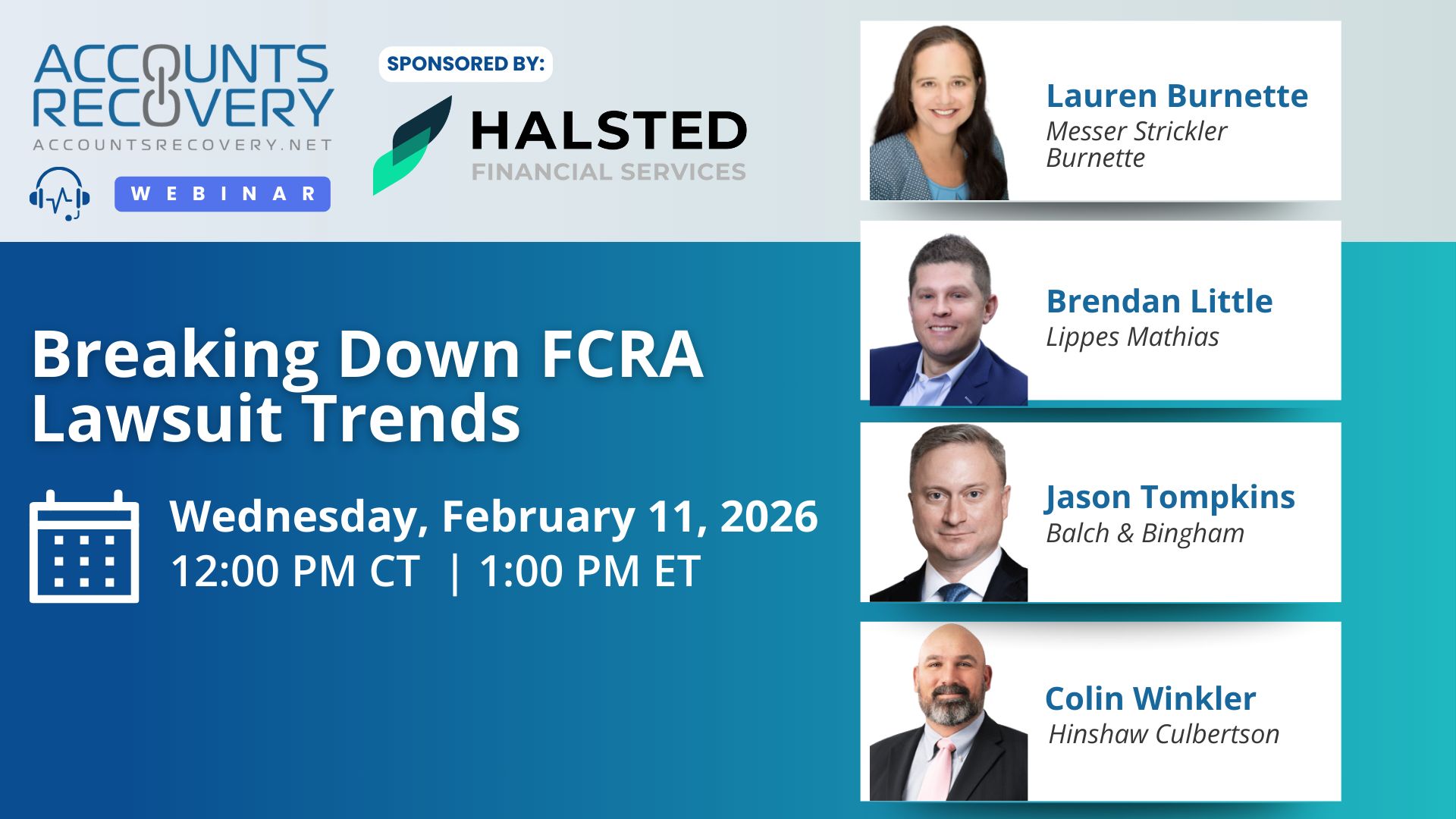 |
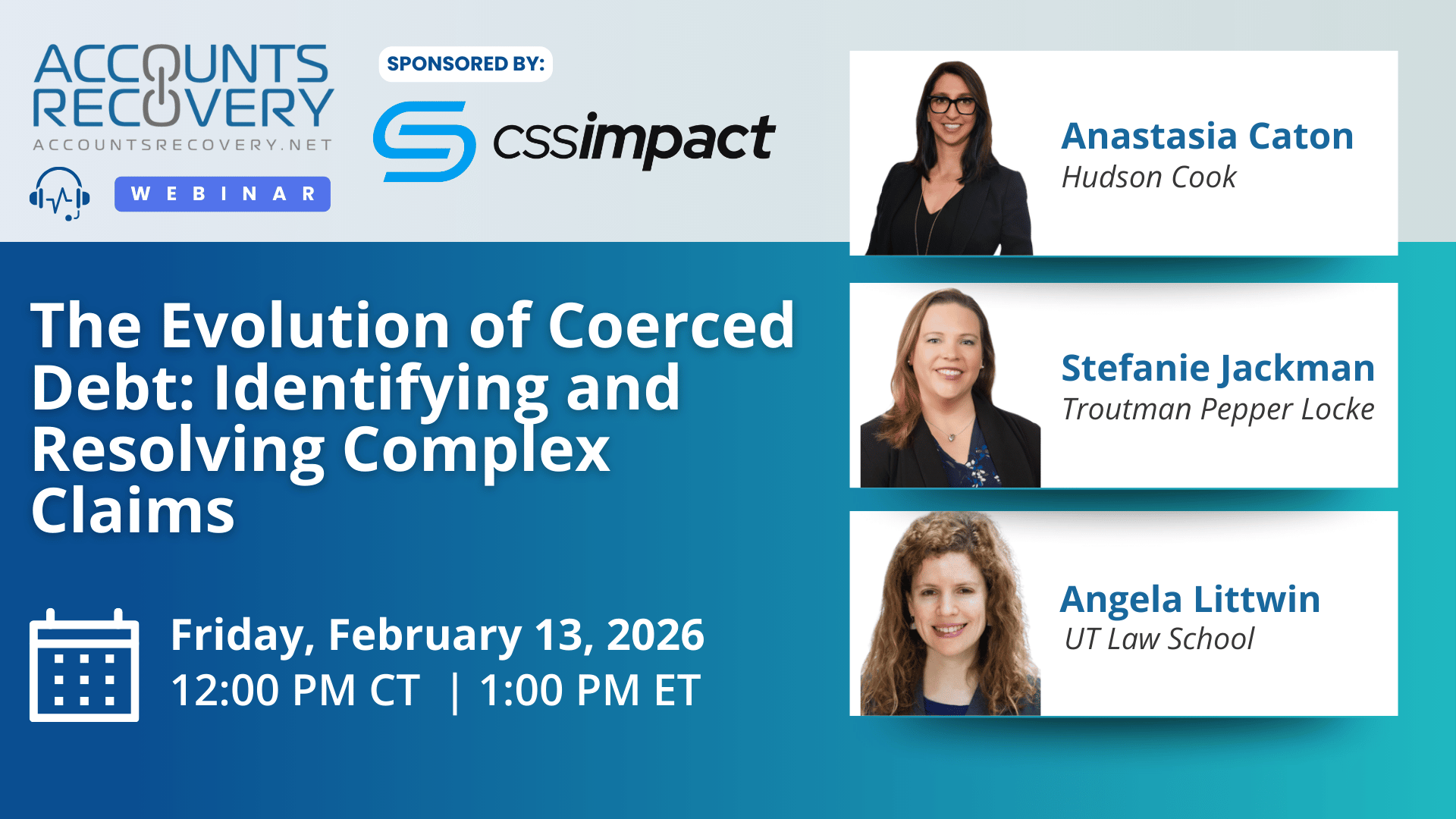 |
CFPB Adds New Hurdles to Credit Reporting Complaints
The Consumer Financial Protection Bureau has changed how consumers can file credit reporting complaints, now requiring them to first dispute errors directly with a credit reporting agency and wait up to 45 days before turning to the Bureau. The move comes as credit reporting complaints have surged to represent more than 88% of all CFPB portal submissions in 2025, with total complaints across all categories growing nearly tenfold over the past five years. While the policy echoes long-standing industry requests to curb duplicative and premature filings, consumer advocates warn the changes may discourage legitimate complaints and make it harder for vulnerable consumers to seek help.
Consumer Groups Renew Focus on Coerced Debt, Urge Reforms That Could Affect Collections
Consumer advocates are sharpening their focus on coerced debt, a form of financial abuse that occurs when a person is pressured, manipulated, or forced by an abusive partner to take on debt in their own name, often without benefiting from the money or credit used. New research highlights that existing legal tools meant to address this problem are largely ineffective, leaving many survivors carrying balances they did not freely choose and creating long term damage to credit profiles, access to housing, employment, and financial stability.
Judge Lets FCRA Claims Over Creditor Naming Errors Move Forward
A District Court judge in Florida has denied a defendant’s motion to dismiss claims it violated the Fair Credit Reporting Act related to the names of creditors listed in the plaintiff’s credit report over how accurate those names were.
Compliance Digest – February 9
Keep on top of important legal rulings and compliance updates by having 11 different experts — Joann Needleman, Mike Frost, Caren Enloe, Issa Moe, Anastasia Caton, Lauren Burnette, Dale Golden, Justin Penn, David Shaver, Jeff Topor, and Brit Suttell — tell you everything you need to know.
This series is sponsored by Frost Echols
WORTH NOTING: Buy now, pay later company Zip has unveiled a new product that lets customers split payments in half instead of four installments ... The job market is so tough these days that people are paying to just get recruited ... Why the Consumer Financial Protection Bureau sidelined its director of diversity ... The simple routine to help keep teenagers away from drugs and alcohol ... Seven ways to reduce fatigue naturally ... The one productivity hack that high performers actually use ... A look at the best and worst ads from last night's Super Bowl ... Teens dish on how AI is upending entry-level jobs.
Music Monday, part I
Music Monday, Part II
Webinar Recap: How States are Defining and Using UDAP

In a recent webinar hosted by AccountRecovery.net and sponsored by CSS Impact, industry experts discussed how states are increasingly leveraging UDAP (Unfair, Deceptive, or Abusive Acts or Practices) statutes to shape compliance expectations across credit and collections.
Panelists John Coleman (Orrick), Chuck Dodge (Hudson Cook), Matt Kiefer (MKiefer Consulting), and Heath Morgan (Martin Golden Lyons Watts Morgan) emphasized that UDAP serves as a regulatory “catchall,” allowing both federal and state authorities to pursue practices that may not fit neatly under statutes like FDCPA or FCRA.
Coleman noted, “Ideas have a way of surviving even swings in the political pendulum,” highlighting how regulatory priorities often persist across administrations. Dodge advised agencies to test communications with non-legal staff to ensure clarity, while Morgan pointed out that regulators often signal enforcement priorities by coining terms like “junk fees” or “dark patterns.” Kiefer warned that AI-driven collection processes could become a new frontier for UDAP scrutiny, especially if they unintentionally steer consumer behavior or create systemic disadvantages.
The panel agreed that compliance requires vigilance, proactive monitoring, and sensitivity to consumer complaints, which often foreshadow regulatory action.
🧠 Key Takeaways:
Monitor regulatory signals: Watch for new terminology (e.g., “junk fees,” “zombie debt”) and speeches from regulators, as these often precede enforcement actions.
Audit consumer-facing processes: Test communications and workflows from the perspective of both regulators and consumers to identify potential confusion or unfairness.
Prepare for AI oversight: Ensure transparency and fairness in AI-driven collection tools, as regulators are already scrutinizing chatbot and automation practices.
This evolving landscape underscores the importance of proactive compliance strategies for debt collection agencies, creditors, fintechs, and healthcare providers alike. Staying ahead of UDAP enforcement trends can reduce risk and strengthen consumer trust.
Did you know you can get full access to all of my past webinars, along with transcripts and summaries of each, for only $29/month? Sign up to be a premium subscriber today!
The Daily Digest is sponsored by TCN