- AccountsRecovery Daily Digest
- Posts
- Daily Digest - April 6, 2026
Daily Digest - April 6, 2026
Brought to you by: TCN | By Mike Gibb

Mike Gibb
April 06, 2026

🎂 Happy Birthday to the following: Elliot Carney of Drop Cowboy, Jennifer Beahon of Stillman Law Office, Brad McCurnin of Harvest Strategy Group, Luke VanOverbeke of Absolute Resolutions Corporation, Stuart Ashmore of Harvest Strategy Group, and Aleksei Mukhortov of Garnet Finance. Happy belated Birthday to: Chris Davis of Capital One (April 5), John Kelan of Rausch Sturm (April 5), Edward Ivan Torres of KeyBank (April 4), and Bruce Godley of Credit Control (April 4).
🎉 Congratulations for starting new positions: Sharon Mancero as Board Member at 1st Franklin Financial Corporation, David Williams as Director of Consumer Finance at ACI Worldwide, Jeffrey Borja as Senior Vice President, Strategic Account & Revenue Growth Solutions at RevSpring, and Chevon Durham as Director of Consumer Operation & Training at Real Time Resolutions.
Logo Madness is Here!
It’s time to crown the best logo in the industry. Full bracket available here so you can track the competition. Click on the link underneath the logo to choose your winner. Voting is open for 24 hours.
 |  |
Which logo deserves to advance? |
🚨New Training Bytes Video Released!
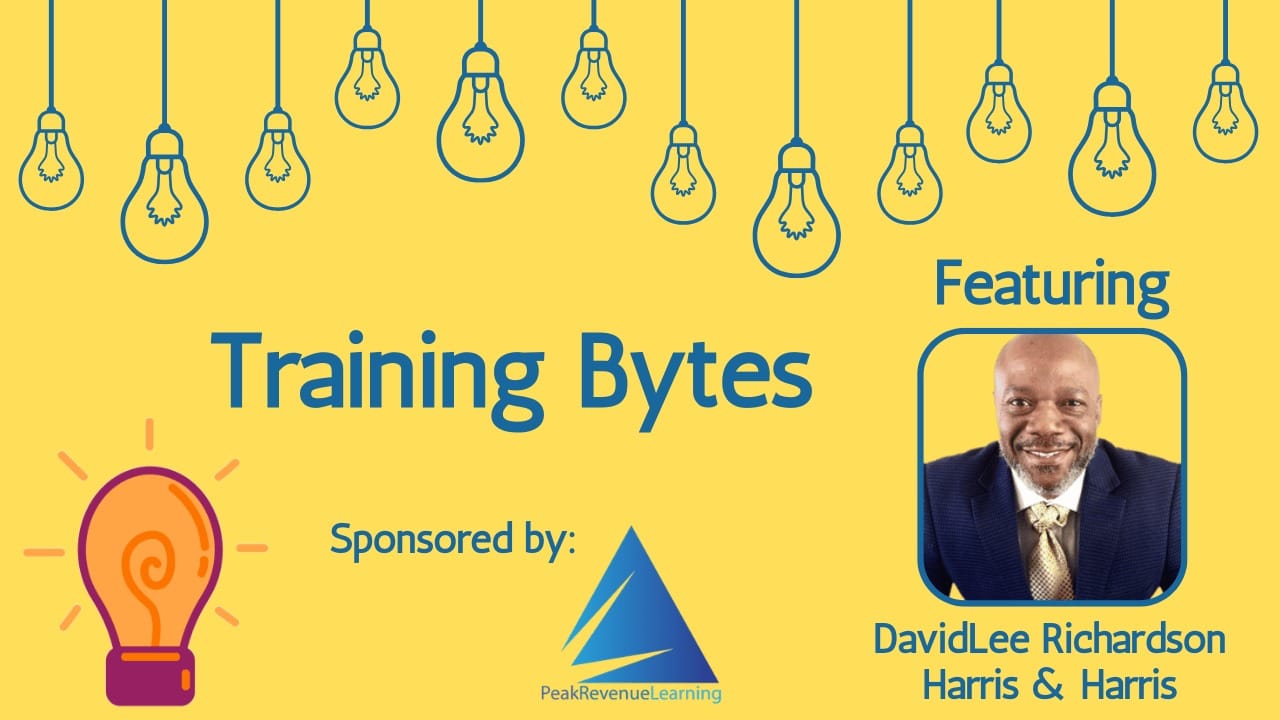
Check out the newest Training Bytes video! Each week, an expert from the accounts receivable management industry will share how he or she would handle different scenarios that collectors often face. This week, DavidLee Richardson from Harris & Harris shares what to do when a consumer says, "I already disputed this with the credit bureau”. Thanks to Peak Revenue Learning for sponsoring this series! Click on the image below to view this week’s episode!
Appeals Court Upholds Voluntary Dismissal Doesn’t Equal Favorable Termination
The Court of Appeals for the Third Circuit has affirmed a District Court ruling that a collection operation’s decision to voluntarily dismiss a lawsuit does not automatically mean the consumer “won” for purposes of bringing a follow-on claim under state law. In a nonprecedential opinion issued last week, the court upheld summary judgment in favor of the defendant, reinforcing a key takeaway for collection operations: timing and context matter when it comes to how courts interpret dismissed lawsuits.

A MESSAGE FROM TCN

TODAY’S WEBINAR
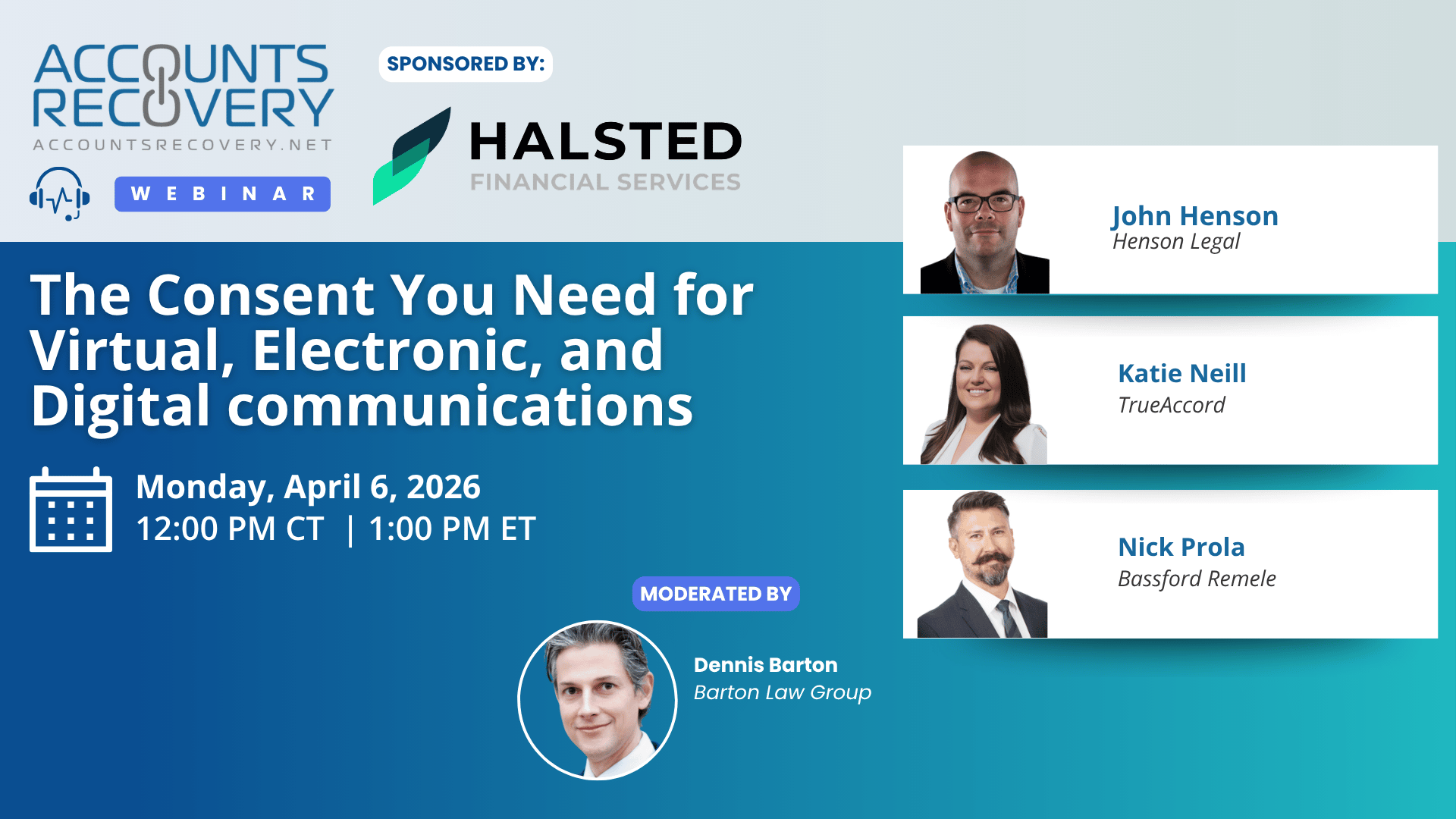
UPCOMING WEBINARS
 |  |
 |
The Future of Customer Engagement? Automation for the Masses, Humans for the Moments That Matter
Nearly half of consumers believe that within the next decade, they won’t interact directly with companies at all, instead relying on AI agents to do it for them. But at the same time, those same consumers are signaling something critical for organizations: when it comes to service and support, human interaction isn’t going away; it’s becoming a premium experience. That tension between efficiency and empathy is emerging as one of the defining dynamics shaping customer experience strategy in 2026.
Judge Draws Line on Default Judgment Challenges While Letting Narrow FDCPA Claim Proceed
A District Court judge in Michigan has mostly overruled objections filed by a plaintiff in a Fair Credit Reporting Act and Fair Debt Collection Practices Act case over a default judgment that was obtained for an unpaid debt.
Hospitals Still in the Red as Denials and Patient Collections Drive $48B Revenue Loss
Most U.S. hospitals are still losing money to start 2026, and the pressure is coming from multiple directions at once. Margins remain negative, claim denials are rising, and providers are collecting less from patients, even as revenue grows. For companies working in medical debt and revenue cycle management, the message is clear: healthcare providers are under increasing financial strain, and that strain is spilling over into how debt is created, managed, and ultimately recovered.
Compliance Digest – April 6
A great assemblage of experts -- Stefanie Jackman, Chad Echols, Lauren Burnette, Xerxes Martin, Jessica Klander, and Leslie Bender -- weigh in on new court rulings, new privacy laws, and how ChatGPT is impacting consumer complaints and interactions in this week's Compliance Digest.
This series is sponsored by Frost Echols
WORTH NOTING: How old, and how much work, the typical house in America is/needs today ... The Senate will hold a hearing next month to celebrate the 25th anniversary of the Telephone Consumer Protection Act ... If you are looking to live frugally, here are six cities that are made for you ... A school district in Arkansas may consider placing unpaid school lunch debts with a collection agency ... Questions to ask yourself if you are feeling stuck in life ... A look at where people across the country are planning on going for vacation this summer ... Tips from a famous author to help frame your life for success ... If you are always the hero, your company is in trouble.
Music Monday, part I
Music Monday, Part II
Webinar Recap: The Hidden Cost of Poor Workforce Planning: How WFM Impacts Recovery Rates

In a recent webinar hosted by Mike Gibb of AccountRecovery.net and sponsored by TCN, industry leaders explored how poor workforce management (WFM) undermines recovery rates, compliance, and profitability across collections and financial services. Panelists Heather Jones (TCN), Peter Sorrentino (Freestyle Telecom Technologies), and Tricia Wyatt (BridgeForce) emphasized that workforce planning is not just about headcount—it’s about aligning forecasting, scheduling, training, and efficiency with business goals.
Heather Jones framed WFM as “the discipline of planning your work and then working your plan,” stressing the importance of data-driven decisions over gut instincts. Peter Sorrentino highlighted the need for long-term planning, noting, “If you want to go fast, go alone. If you want to go far, go together.” Tricia Wyatt underscored honesty, coaching, and continuous training as key to sustaining workforce efficiency.
The panel warned against both underperformance and “over-servicing,” where exceeding goals wastes resources and erodes margins. They also discussed integrating non-revenue tasks (like legal correspondence or administrative work) into shrinkage models, ensuring compliance and preventing burnout. Ultimately, the conversation reinforced that sustainable recovery depends on balancing efficiency, profitability, and employee well-being.
🧠 Key Takeaways:
Adopt a data-driven WFM discipline: Track metrics such as volume trends, adherence, shrinkage, and revenue per head to distinguish staffing issues from planning problems.
Balance efficiency with compliance and service goals: Avoid both underperformance and overshooting targets; profitability depends on maintaining operating margins, not just liquidation rates.
Invest in training and cross-skilling: Build resilience by coaching staff, assigning tasks based on skill sets, and preventing single points of failure that lead to burnout or compliance risks.
This webinar makes clear: effective workforce planning is not optional—it’s the foundation for sustainable recovery, profitability, and client satisfaction across the collections ecosystem.
Did you know you can get full access to all of my past webinars, along with transcripts and summaries of each, for only $29/month? Sign up to be a premium subscriber today!
The Daily Digest is sponsored by TCN