- AccountsRecovery Daily Digest
- Posts
- Daily Digest - April 21, 2026
Daily Digest - April 21, 2026
Brought to you by: TCN | By Mike Gibb

Mike Gibb
April 21, 2026

🎂Happy Birthday to: Kali Fox Miller of Oportun.
Logo Madness!
It’s time to crown the best logo in the industry. Full bracket available here so you can track the competition. Click on the link underneath the logo to choose your winner. Voting is open for 24 hours.
 |  |
Which logo deserves to advance? |
Lawsuit Alleges Debt Buyer Pursued Collection After Creditor Confirmed Fraud
Transactions involving debts are links in a chain and you know what they say about chains — they are only as strong as their weakest link. A debt buyer is facing claims of violating the Fair Credit Reporting Act and Fair Debt Collection Practices Act among other allegations, and a creditor is also facing claims in a lawsuit filed by a consumer related to a debt that she claims was not opened or authorized by her.
This series is sponsored by WebRecon

A MESSAGE FROM TCN

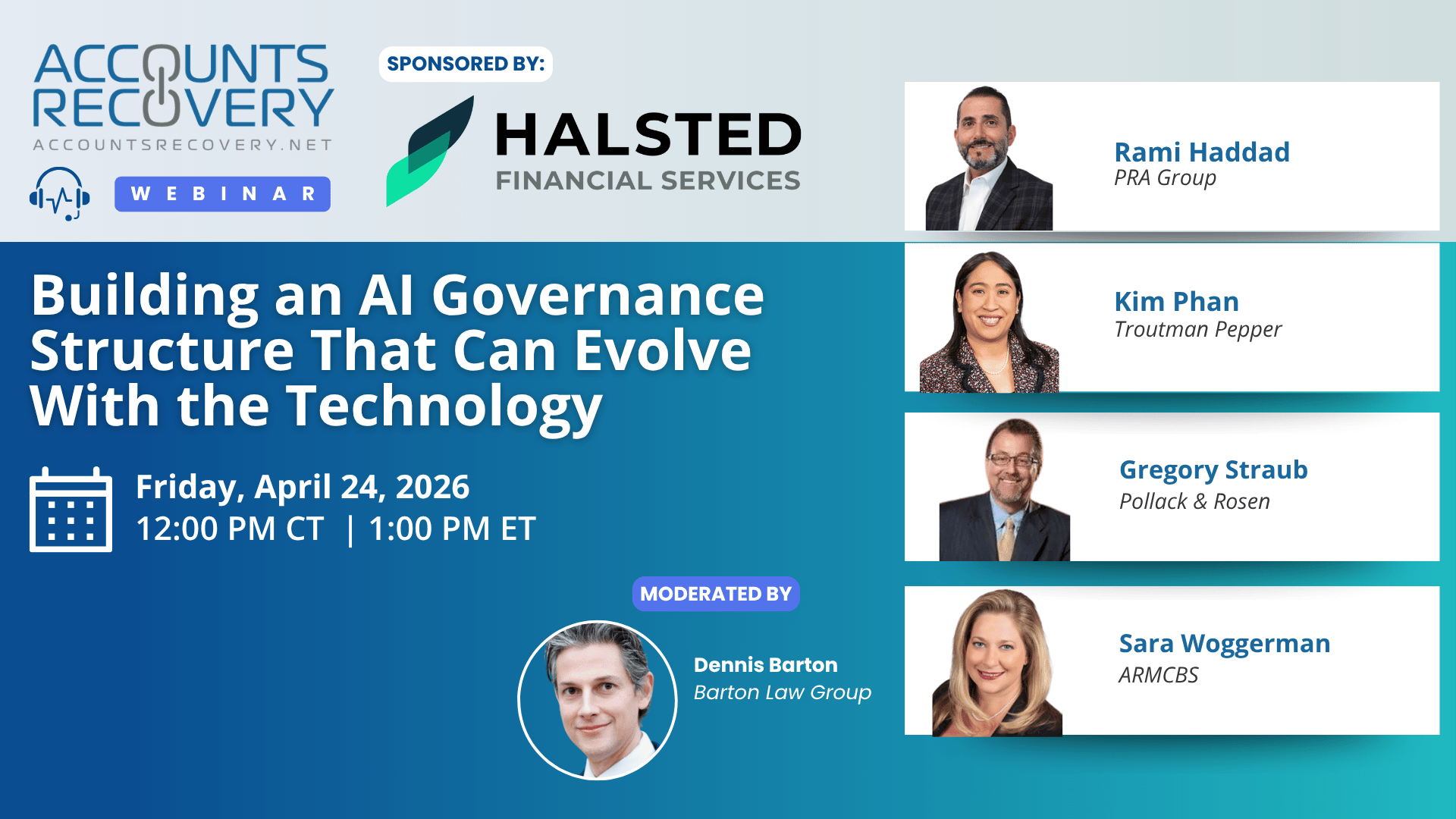
TODAY’S WEBINAR

UPCOMING WEBINARS
 |  |
 |
California Treasurer Backs Bill to Buy and Cancel Medical Debt
The Treasurer of California yesterday announced she was sponsoring legislation in the state that would establish a program to purchase and forgive unpaid medical debts for consumers in The Golden State.
Judge Grants MSJ For Defendant in FCRA Case Over Lack of Evidence of Inaccuracy
A District Court judge in Ohio has granted a defendant’s motion for summary judgment in a Fair Credit Reporting Act case, ruling the plaintiff did not do enough to make a case that the information being reported in his credit report was inaccurate.
New TCPA Bill Targets Robocalls but Expands Risk for Dialing Operations
A bill has been introduced in both the House of Representatives and Senate that seeks to amend the Telephone Consumer Protection Act by expanding the Do Not Call list and updates the definition of an automated telephone dialing system.
Judge Reduces Hourly Rate but Upholds Time Billed in FDCPA Fee Dispute
A District Court judge in California has essentially split the difference in awarding attorney’s fees to the plaintiff in a Fair Debt Collection Practices Act case, awarding the plaintiff’s attorney a lower hourly rate than requested, largely due to the jurisdiction in which the case was filed.
WORTH NOTING: Hacks to help you stretch your household budget ... Two simple money habits everyone should do now ... Consumers are putting more financial decisions in the hands of AI ... A look at the state of the credit card market ... Red Lobster's endless shrimp deal is back, but with a few strings ... A lot of Americans are picky about the water they drink ... The origins of features that glue us all to our phones ... A look at how one fast food chain is using AI to interact with consumers.
Trailer Tuesday, part I
Trailer Tuesday, Part II
Webinar Recap: A Roadmap for the Future of AI in Credit and Collections

Hosted by Mike Gibb and sponsored by Halsted Financial, this webinar brought together industry leaders Juergen Lunkwitz (Contract Callers), Matthew Maloney (FFAM 360), and Michael Meyer (At An Edge Consulting) to discuss how AI is reshaping credit and collections.
Panelists highlighted practical applications already in use, including AI-driven voice agents, compliance monitoring, contract drafting, and home-brewed workflow tools. Maloney noted, “AI is flattening out execution roles and elevating decision-making roles,” while Lunkwitz emphasized the shift from call center representatives to “call center analysts” supervising multiple AI-driven interactions.
The conversation also addressed compliance and governance. Meyer pointed out that AI can proactively prevent regulatory missteps, while Maloney warned that regulators may soon demand to “see the code” behind AI systems. The panel agreed that governance committees and guardrails are essential as adoption accelerates.
Looking ahead, Maloney envisioned AI as a “Chief Strategy Officer,” delivering real-time intelligence and proactive alerts to management. Lunkwitz speculated about regulators deploying AI agents to audit systems directly. The discussion also touched on industry disruption: as creditors adopt AI internally, outsourcing models may shift, reducing reliance on agencies.
🧠 Key Takeaways:
Strengthen AI Governance: Establish clear oversight structures to manage compliance, strategy, and ethical use of AI.
Redefine Workforce Roles: Prepare for frontline positions to evolve into supervisory and analytical roles, ensuring staff are “AI fluent.”
Anticipate Regulatory Scrutiny: Be ready for audits that may require demonstrating AI system architecture and controls.
This session underscored that AI is no longer hype—it is actively transforming compliance, operations, and strategy across the credit and collections industry. Agencies, creditors, and fintechs alike must adapt quickly to remain competitive in this evolving landscape.
Did you know you can get full access to all of my past webinars, along with transcripts and summaries of each, for only $29/month? Sign up to be a premium subscriber today!
The Daily Digest is sponsored by TCN