- AccountsRecovery Daily Digest
- Posts
- Daily Digest - April 10, 2026
Daily Digest - April 10, 2026
Brought to you by: TCN | By Mike Gibb

Mike Gibb
April 10, 2026

🎂 Happy Birthday to the following: Robert Winters of Crown Asset Management and Justin Layne of JP Morgan.
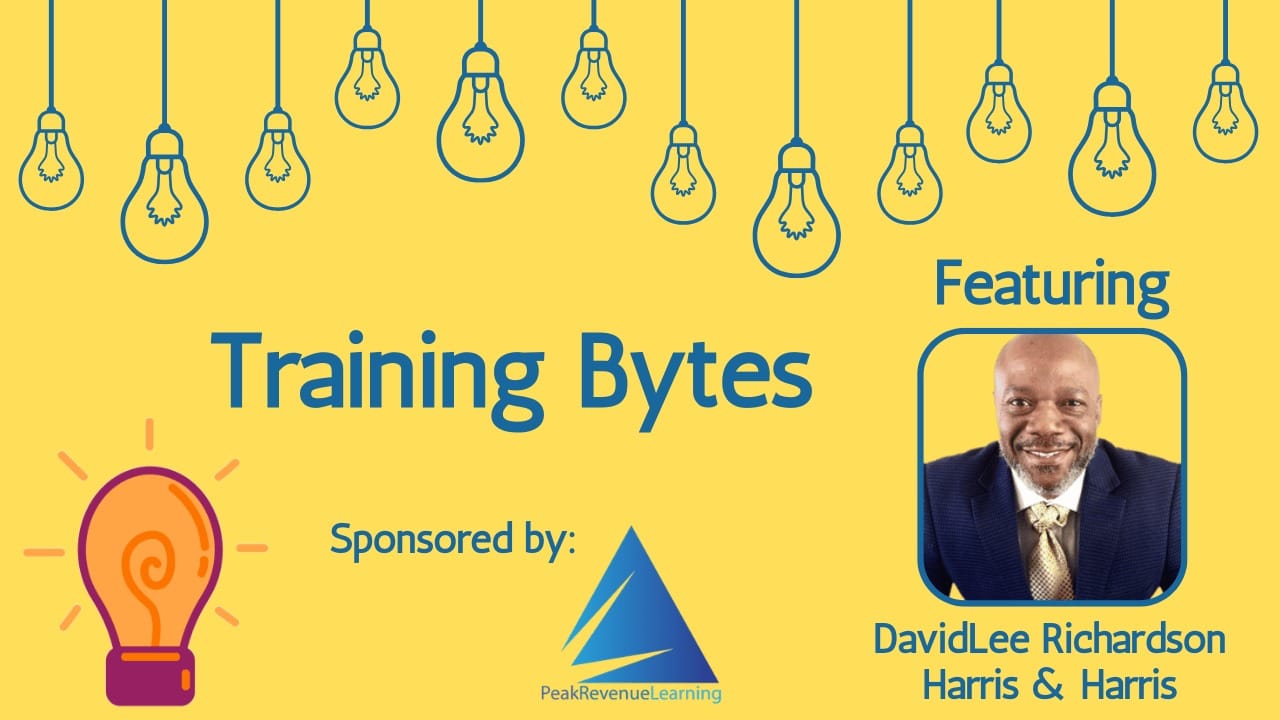
🚨New Training Bytes Video Released!
Check out the newest Training Bytes video! Each week, an expert from the accounts receivable management industry will share how he or she would handle different scenarios that collectors often face. This week, DavidLee Richardson from Harris & Harris shares what to do when the consumer is clearly elderly and appears confused or potentially vulnerable. Thanks to Peak Revenue Learning for sponsoring this series! Click on the image below to view this week’s episode!
Logo Madness is Here!
It’s time to crown the best logo in the industry. Full bracket available here so you can track the competition. Click on the link underneath the logo to choose your winner. Voting is open for 24 hours.
 |  |
Which logo deserves to advance? |
Collection Operation Lumped Into Class Action Against Healthcare Provider
A collection operation has been included in a class-action lawsuit alleging it violated the Fair Debt Collection Practices Act and state law in Ohio over attempts to collect on an unpaid medical debt that the plaintiff claims was mis-coded by the healthcare provider, which has also been named as a defendant in the lawsuit.
This series is sponsored by WebRecon

A MESSAGE FROM TCN

TODAY’S WEBINAR
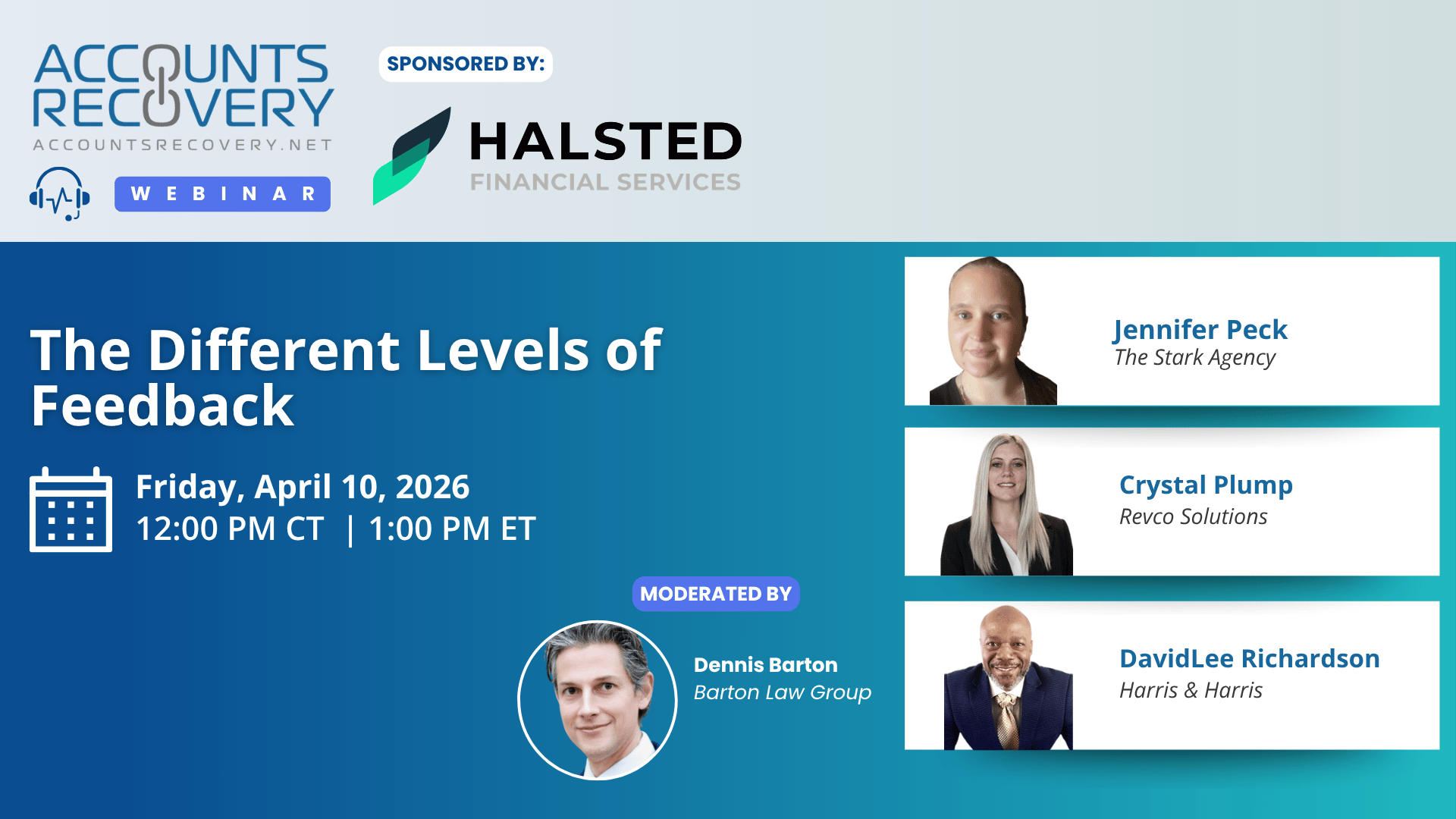
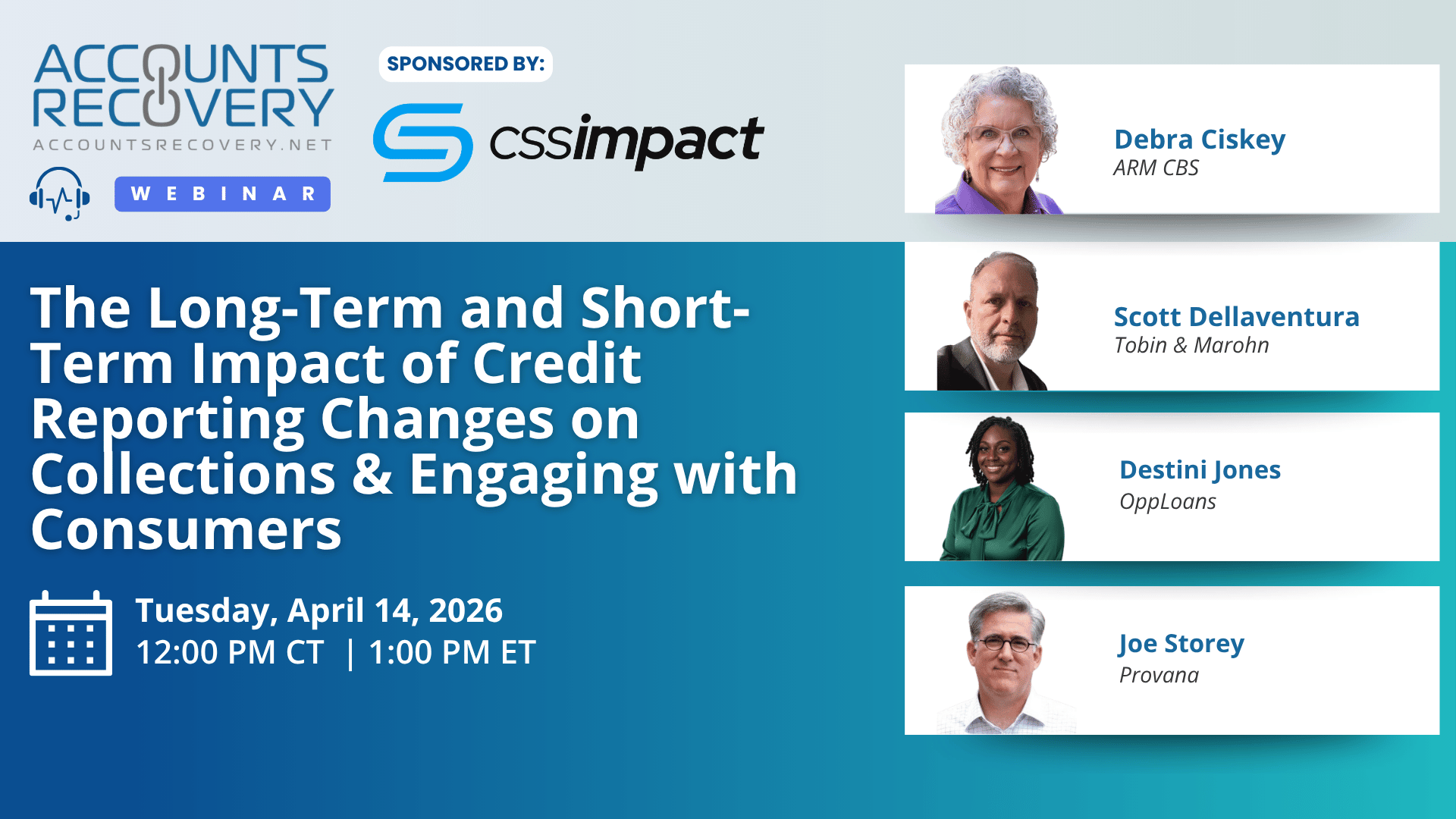
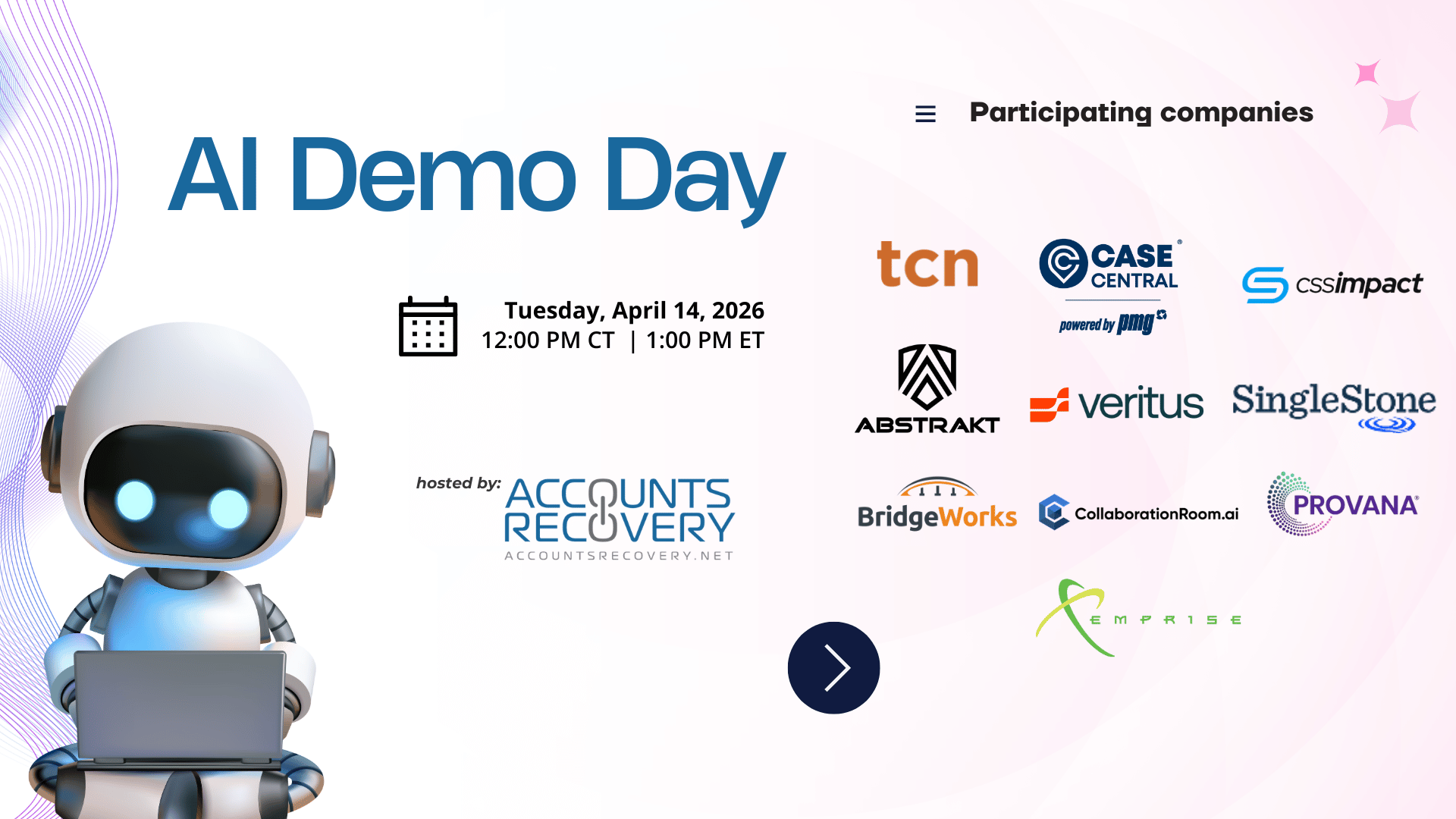
UPCOMING WEBINARS
 |  |
 |  |
Judge Sides with Collector in FDCPA Case Over Cease Request and Validation Duties
A District Court judge in Massachusetts has granted a motion for summary judgment filed by a collection operation that was included in a Fair Debt Collection Practices Act case against a cable provider over how the collection operation validated the debt after the plaintiff requested that no further communication attempts be made.
NCUCA Roundup: Preparing for Exams, Skiptracing Tips
LAS VEGAS — As in all things, anticipation is an important component of surviving regulatory exams, noted Art Sookazian, the vice president of collections and risk management at Los Angeles Federal Credit Union and the president of the National Credit Union Collections Alliance, speaking during a session on the importance of preparation during the association’s annual conference. Preparation and anticipating what the regulators are likely to focus on are key reasons that have helped the credit union pass its past four exams without regulators identifying a single finding, Sookazian said.
Judge Grants MSJ For Defendant in FCRA Case Over Lack of Evidence of Inaccuracy
A District Court judge in Michigan has granted a defendant’s motion for summary judgment in a Fair Credit Reporting Act case, that accused the defendant of publishing inaccurate information about the plaintiff and failing to reinvestigate disputed information.
New FCC Rule Could Force Providers to Vet Customers More Aggressively Before Allowing Calls
The Federal Communications Commission is moving to tighten its grip on illegal robocalls, proposing new rules that would require originating voice providers to collect and verify significantly more information about customers before allowing them to place calls, while also introducing steeper, per-call penalties for failures. The proposal, outlined in a Further Notice of Proposed Rulemaking, signals the FCC’s belief that existing “Know Your Customer” requirements are not being enforced rigorously enough, allowing bad actors to exploit gaps in the system and continue targeting consumers at scale. The regulator aims to tackle the proposal at it’s April meeting, scheduled for April 30.
WORTH NOTING: Even middle-income families are changing their spending habits and deferring major spending decisions ... More consumers are looking for help dealing with home foreclosures, which is a bad sign ... How to guess if your job is going to be around in five years ... If you are a fast eater like me, here are five tips to help you slow down and enjoy your meals ... A coalition in Detroit is willing to pay people to move to Motown ... Why you may want to think twice before using an emoji in a work message ... Science explains why you tend to wake up at 3am and how to go back to sleep ... Have you ever been "vaguebooked" on social media?
Funny Friday, part I
Funny Friday, Part II
Webinar Recap: Compliance-First AI: Understand How Federal & State Agencies are Regulating AI in Collections

Artificial intelligence is transforming debt collection, but regulators are increasingly focused on ensuring its responsible use. In a recent webinar, sponsored by Fiber by Clerkie, experts from law firms, regulatory agencies, and compliance groups highlighted how federal and state authorities are scrutinizing AI for accuracy, accountability, transparency, and fairness.
Key themes discussed:
Accuracy & Reliability: Regulators stressed that AI outputs must be correct, especially in consumer communications and account decisioning. As Kat Hyland noted, “AI amplifies the speed and scale at which harm can occur if fundamentals are not in place.”
Accountability & Vendor Oversight: Institutions remain responsible for AI-driven outcomes, even when using third-party vendors. Joanne Needleman emphasized the importance of AI governance committees to monitor adoption and compliance risks.
Transparency & Fairness: Consumers should understand when AI is being used, and institutions must test for disparate outcomes to avoid bias.
Regulatory developments:
Federal laws like FDCPA, TCPA, and UDAP already apply to AI-driven conduct.
Colorado’s AI Act (effective 2026) requires risk management, disclosures, and human oversight.
Maine mandates clear notice when consumers interact with AI.
Maryland is developing recommendations for regulation by July 2026.
New York City’s Shield Debt Collection Rule imposes stricter communication caps and documentation requirements.
Despite these challenges, regulators acknowledge AI’s potential for compliance monitoring, fraud detection, and back-office automation. Sarah Auchterlonie reminded attendees: “AI is just a tool. Bring it back to basics—fairness, equality, and compliance.”
🧠 Key Takeaways:
Audit AI Tools Before Deployment: Understand whether tools are generative AI, LLMs, or compliance assistants, and document their functions.
Establish AI Governance Structures: Create oversight committees and demand governance documentation from vendors.
Leverage AI for Compliance First: Focus on internal use cases like audits, fraud detection, and workflow automation before expanding to consumer-facing applications.
Did you know you can get full access to all of my past webinars, along with transcripts and summaries of each, for only $29/month? Sign up to be a premium subscriber today!
The Daily Digest is sponsored by TCN